

Sustancia química prioritaria
Bisphenol F (BPF) is used to make hard plastic parts for household appliances, vehicles, and other items. It is also used in protective coatings, like linings in some drink cans and dental sealants. BPF can be formed from a naturally occurring chemical in yellow/white mustard seeds during production of some yellow mustard.
Fact Sheet
BPF is found in:
- Some protective coatings used inside drink cans; on laminate flooring and concrete; and inside water tanks.
- Hard plastic parts used in various items, such as household appliances; cars, airplanes, and other vehicles; and medical devices.
- Some dental sealants.
- Some yellow mustard.
- Building materials, like sealants, adhesives, and grout.
Possible health concerns:
- BPF may interfere with the body’s natural hormones.
Possible ways to reduce exposure:
- Avoid canned drinks.
- If you eat mustard, choose a variety of types and brands. BPF hasn’t been found in any mustard made from brown or black seeds, and it’s not in all types of yellow mustard. Because it’s formed during production and is not intentionally added, BPF won’t be listed on the ingredient label.
- Because BPF can come out of products and collect in dust:
- Wash your and your child’s hands often, especially before preparing or eating food.
- Clean your floors regularly, using a wet mop or HEPA vacuum if possible, and use a damp cloth to dust.
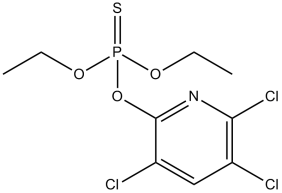
Organophosphate pesticides are used in commercial agriculture to control pests on fruit and vegetable crops. They are also used in home gardens, for flea control on pets, and in some no-pest strips. In the past, organophosphates were widely used inside homes to control other pests like termites and ants, but these uses have been discontinued.
Fact Sheet
Organophosphate pesticides are found in
- Some flea and tick collars, shampoos, sprays, and powders for dogs and cats.
- Some garden pest control products and no-pest strips.
- Some fruits and vegetables. Small amounts of organophosphate pesticides found in these foods come from agricultural pesticide use.
- Air and dust in areas where organophosphate pesticides are used, such as some farms or home gardens.
- Some treatments for head lice.
Possible health concerns of some organophosphate pesticides
- May affect the nervous system.
- May harm the developing fetus, possibly affecting later learning and behavior.
Possible ways to reduce exposure to organophosphate pesticides
- Use pesticide-free methods for pest prevention in your home and garden. If you choose to use pesticides, consider baits and traps instead of sprays. Always follow directions for use, storage, and disposal.
- To help control fleas without pesticides, comb pets with a flea comb, regularly bathe pets with pesticide-free shampoo, and wash pet bedding.
- If a pesticide is needed for flea control, consider safer spot-on treatments or oral medications for your pet. Ask your veterinarian about the safest choices.
- Wash all fruits and vegetables before eating them.
- Consider choosing organic or pesticide-free fruits and vegetables.
- Because pesticides can be in dust, wash your hands often, especially before eating or preparing food, clean your floors regularly, and use a damp cloth to dust.
For More Information
Tips for pest prevention: http://www.cdpr.ca.gov/docs/dept/factshts/pull2.pdf Find local disposal site for pesticides: http://recyclenation.com/Biomonitoring California Information
Documents, Presentations, and Publications
Chemicals in this group
- 2-Isopropyl-4-methyl-6-hydroxypyrimidine (IMPY)
- TCPy [3,5,6-Trichloro-2-pyridinol]
- Azinphos methyl
- Chlorethoxyphos
- Chlorpyrifos
- Chlorpyrifos methyl
- Coumaphos
- Diazinon
- Dimethoate
- Disulfoton
- Ethion
- Fenthion
- Isazophos-methyl
- Malathion
- Methidathion
- Methyl parathion
- Oxydemeton-methyl
- Parathion (Ethyl parathion)
- Phorate
- Phosmet (Imidan)
- Pirimiphos-methyl
- Sulfotepp
- Temephos
- Terbufos
- Dialkylphosphates (DAPs)
- Diethyldithiophosphate (DEDTP)
- Diethylphosphate (DEP)
- Dimethyldithiophosphate (DMDTP)
- Dimethylthiophosphate (DMTP)
External Biomonitoring Links
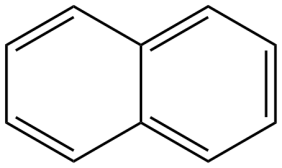
PAHs are formed when materials like gasoline, diesel, tobacco, and wood are burned. They also form when foods are grilled, barbecued, smoked, fried, or roasted.
Hydroxy-polycyclic aromatic hydrocarbons (hydroxy-PAHs) are measured as indicators of exposure to the various PAHs.
Fact Sheet
PAHs are found in:
- Tobacco and marijuana smoke, including from cigarettes, cigars, and pipes; and chewing tobacco.
- Exhaust from cars, trucks, and buses, as well as road dust.
- Wood smoke, such as from fireplaces, wood stoves, campfires, and wildfires.
- Exhaust from gas burners, unvented gas fireplaces, and kerosene heaters.
- Smoke from grilling or burning cooking oil or food.
- Food that has been grilled, barbecued, smoked, fried, or roasted, and some teas.
- Liquid smoke seasonings and flavorings.
Possible health concerns of some PAHs:
- May contribute to asthma, bronchitis, and other respiratory problems.
- May affect the developing fetus, including effects on growth.
- May reduce fertility and interfere with the body’s natural hormones.
- Can increase cancer risk.
Possible ways to reduce exposure to PAHs:
- Take steps to improve indoor air quality:
- Do not smoke or allow others to smoke in your home or car, or around your child.
- Always use an exhaust fan or open windows when cooking indoors, especially when cooking with oils heated at high temperatures, or whenever using a gas stove.
- Do not use a gas oven or gas burners to heat your home.
- If you cook with barbecues and grills, use them outdoors only.
- Do not idle cars inside garages, especially garages attached to your home.
- Avoid burning wood, especially for home heating.
- Limit how much you eat grilled, barbecued, smoked, fried, or roasted food. Try steaming, boiling, stewing, or poaching your food more often. Avoid burned food.
- Because PAHs can collect in dust:
- Wash your and your child’s hands often, especially before preparing or eating food.
- Clean your floors regularly, using a wet mop or HEPA vacuum if possible, and use a damp cloth to dust.
For More Information
Fact sheet on PAHs: http://www.atsdr.cdc.gov/toxfaqs/tfacts69.pdfChemicals in this group
External Biomonitoring Links

PCBs were once widely used to insulate electrical equipment and as plasticizers. PCBs were banned in the late 1970s but are still in some old equipment and products. They have spread through the environment and take a long time to break down.
Also see Hydroxy-PCBs.
Fact Sheet
PCBs are found in
- Some fatty fish like salmon and canned sardines. (Fatty fish are still good to eat. These fish are an excellent source of healthy fats [like "omega-3" fatty acids] and protein.)
- Some high-fat animal products like hamburger meat and ice cream.
- Some products and building materials produced before 1980, such as:
- Caulk in older buildings, including schools.
- Some old fluorescent light fixtures.
- Some paint, wood floor finishes, plastics, and foam or fiberglass insulation.
Possible health concerns of PCBs
- Can harm the developing fetus and infant, possibly affecting growth and learning.
- Can interfere with the body’s natural hormones and affect the immune system.
- May decrease fertility.
- May increase cancer risk.
Possible ways to reduce exposure to PCBs
PCBs have been decreasing in the environment and food because they are no longer manufactured. You might further reduce your exposure by:
- Including plenty of variety in your diet.
- Trimming off skin from fish and fat from meat and cooking it on a rack to let fat drain off.
- Washing your hands often, especially before eating or preparing food, cleaning your floors regularly, and dusting with a damp cloth. This is because PCBs may be in dust and soil.
For More Information
Information for people who catch and eat fish: http://oehha.ca.gov/fish/pcbs-fish-caught-california PCBs in schools and other buildings: https://www.epa.gov/pcbs/polychlorinated-biphenyls-pcbs-building-materialsBiomonitoring California Information
Chemicals in this group
- Hydroxy-PCBs (metabolites of PCBs)
- PCB 066 (2,3',4,4'-Tetrachlorobiphenyl)
- PCB 074 (2,4,4',5-Tetrachlorobiphenyl)
- PCB 099 (2,2',4,4',5-Pentachlorobiphenyl)
- PCB 101 (2,2',4,5,5'-Pentachlorobiphenyl)
- PCB 105 (2,3,3',4,4'-Pentachlorobiphenyl)
- PCB 118 (2,3',4,4',5-Pentachlorobiphenyl)
- PCB 153 (2,2',4,4',5,5'-Hexachlorobiphenyl)
- PCB 156 (2,3,3',4,4',5-Hexachlorobiphenyl)
- PCB 170 (2,2',3,3',4,4',5-Heptachlorobiphenyl)
- PCB 180 (2,2',3,4,4',5,5'-Heptachlorobiphenyl)
- PCB 183 (2,2',3,4,4',5',6-Heptachlorobiphenyl)
- PCB 187 (2,2',3,4',5,5',6-Heptachlorobiphenyl)
- PCB 194 (2,2',3,3',4,4',5,5'-Octachlorobiphenyl)
- PCB 196 (2,2',3,3',4,4',5,6'--Octachlorobiphenyl)
- PCB 199 (2,2',3,3',4,5,5',6-Octachlorobiphenyl)
- PCB 203 (2,2',3,4,4',5,5',6-Octachlorobiphenyl)
- PCB 206 (2,2',3,3',4,4',5,5',6-Nonachlorobiphenyl)
- PCB 209 (2,2',3,3',4,4',5,5',6,6'-Decachlorobiphenyl)
- PCB 028 (2,4,4'-Trichlorobiphenyl)
- PCB 167 (2,3',4,4',5,5'-Hexachlorobiphenyl)
External Biomonitoring Links
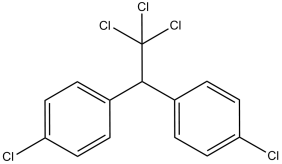
Organochlorine pesticides were once widely used in agriculture and for home pest control. Most organochlorine pesticides, including all those measured by Biomonitoring California, are no longer used in the U.S. These pesticides have spread through the environment and take a long time to break down.
Fact Sheet
Organochlorine pesticides are found in
- Some high‐fat dairy products, such as butter and high‐fat cheeses like cream cheese and American cheese.
- Some high‐fat meats, such as some ground beef.
- Some fatty fish, such as salmon and canned sardines. Fish are still good for you to eat. Fatty fish are an excellent source of healthy fats (like “omega‐3” fatty acids) and protein.
Possible health concerns of organochlorine pesticides
- May affect the developing fetus, possibly leading to later changes in learning and behavior.
- May interfere with the body’s natural hormones.
- May have effects on reproduction, such as decreased fertility.
- May increase cancer risk.
Possible ways to reduce exposure to organochlorine pesticides
Organochlorine pesticides have been decreasing in the environment and food because they are no longer used in the U.S. You might further reduce your exposure by:
- Including plenty of variety in your diet.
- Trimming off skin from fish and fat from meat and cooking on a rack to let fat drain off.
- Washing your hands often, especially before eating or preparing food, cleaning your floors regularly, and dusting with a damp cloth. This is because organochlorine pesticides may be in dust and soil from past use.
For More Information
If you catch fish to eat, check fish advisories for specific water bodies (open link and scroll down): http://www.oehha.ca.gov/fish/so_cal/index.htmlBiomonitoring California Information
Documents, Presentations, and Publications
Chemicals in this group
- Aldrin
- Chlordane
- Dichlorodiphenyltrichloroethane (DDT) [para,para isomer]
- Dichlorodiphenyldichloroethane (DDE) [para,para isomer]
- Dieldrin
- Endosulfan
- Endrin
- Heptachlor
- Hexachlorobenzene (HCB)
- beta-Hexachlorocyclohexane (beta-HCH)
- Methoxychlor
- Mirex
- 2,4,5-Trichlorophenol
- 2,4,6-Trichlorophenol
- trans-Nonachlor
- Oxychlordane
External Biomonitoring Links
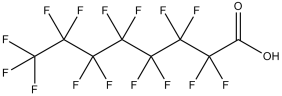
PFCs are part of the group of Perfluoroalkyl and Polyfluoroalkyl Substances (PFASs) .
Biomonitoring California Information
Mercury is a metal that is found in nature. It is released into the environment when coal is burned, by some industries, and from past use in gold mines. Mercury builds up in certain types of fish.
Fact Sheet
Mercury is found in:
- Certain types of fish and seafood. This is the most common source of exposure to mercury.
- Some imported face creams used for skin lightening, anti-aging, or acne.
- Some herbal medicines and other traditional remedies, especially from China and India.
- Silver-colored dental fillings.
- Glass thermometers, older barometers, and blood pressure gauges.
- Fluorescent lights, including compact fluorescent light (CFL) bulbs.
Possible health concerns of mercury:
- Can affect brain development and cause learning and behavior problems in infants and children who were exposed in the womb.
- Can harm the nervous system and kidneys.
- May affect the heart.
- May increase cancer risk.
Possible ways to reduce exposure to mercury:
- Choose fish that are lower in mercury, such as salmon, tilapia, trout, canned light tuna, sardines, anchovies, and oysters.
- Avoid fish that are high in mercury, such as shark, swordfish, orange roughy, bluefin and bigeye tuna, tilefish, king mackerel, and marlin.
- Do not use imported face creams for skin lightening, anti-aging, or acne unless you are certain that they do not contain mercury.
- Properly recycle CFL bulbs (see below).
- Properly clean up broken thermometers, CFL bulbs, and other items containing mercury (see below). Do not let children play with silver liquid from items like mercury thermometers.
For More Information
Information on mercury for people who catch and eat fish, call OEHHA at (916) 327-7319 or visit: http://oehha.ca.gov/fish/mercury-fish-information-people-who-eat-fish Guide for choosing fish that are lower in mercury: http://oehha.ca.gov/media/downloads/fish/fact-sheet/2011commfishguidecolor.pdf Concerns about mercury exposure - contact the California Poison Control System hotline 1-800-222-1222 or https://calpoison.org/ Fact sheet on mercury in your environment, with information on cleaning up mercury spills: http://www.epa.gov/mercury/spills/ For CFL recycling locations, call 1-800-RECYCLING (1-800-732-9254), or visit: http://recyclenation.com/External Biomonitoring Links

Lead is a metal that is found in nature and is used in many industries and products.
Fact Sheet
Lead is widespread in the environment and is found in:
- Chipped and peeling paint and dust in and around homes built before 1978 (when lead was banned in house paint).
- Bare soil around homes built before 1978, or near roadways.
- Job sites or hobby areas, such as construction and painting sites, shooting ranges, and recycling facilities for electronics, batteries, and scrap metal.
- Some candies and spices from Mexico and Asia.
- Some traditional remedies, especially brightly colored remedies like Azarcón and Greta.
- Many consumer products, including:
- Some ceramic dishes and pottery, and some pewter and crystal pitchers and goblets.
- Some baby bibs, electrical cords, purses, garden hoses, and other products made of vinyl or imitation leather.
- Some toys, art supplies, costume jewelry, cosmetics, and hair dyes.
- Some brass faucets, fishing weights and sinkers, and curtain weights.
Possible health concerns:
- Can affect brain development and contribute to learning problems in infants and young children.
- Can increase blood pressure, decrease kidney and brain function, and cause reproductive problems.
- May increase cancer risk.
Possible ways to reduce exposure:
- Keep children away from chipped and peeling paint. Use a certified professional if you plan to permanently remove or seal lead-based paint.
- Cover bare soil with grass, bark, or gravel, especially around homes built before 1978 and homes near roadways.
- If you work with lead or do house renovation, use proper protective equipment. Follow other safe work practices, including washing hands frequently, keeping work dust out of your home, and washing work clothes separately.
- Use cold water for drinking and cooking to reduce the release of lead from some faucets and old pipes.
- Because lead can collect in dust:
- Wash your and your child’s hands often, especially before preparing or eating food.
- Clean your floors regularly, using a wet mop or HEPA vacuum if possible, and use a damp cloth to dust.
- Eat a well-balanced diet with enough calcium, iron, and vitamin C, which can help reduce the amount of lead that your body absorbs.
For More Information
California’s Childhood Lead Poisoning Prevention Branch at (510) 620-5600, or go to: http://www.cdph.ca.gov/programs/CLPPB/Pages/default.aspx California’s Occupational Lead Poisoning Prevention Program at (510) 620-5740, or go to: https://www.cdph.ca.gov/Programs/CCDPHP/DEODC/OHB/OLPPP/Pages/OLPPP.aspxBiomonitoring California Information
Documents, Presentations, and Publications
External Biomonitoring Links
Cadmium is a metal that is found in nature and is used in many industries and products.
Fact Sheet
Cadmium is found in
- Cigarette and other tobacco smoke.
- Some cheap metal jewelry, including some charms.
- Rechargeable batteries labeled NiCd or NiCad.
- Metal plating and solder.
- Some red, yellow, and orange decorative paints, which may be used on glassware and pottery.
Possible health concerns:
- May harm the developing infant and child.
- May harm the reproductive system in men.
- Can damage the lungs and kidneys.
- Can increase cancer risk.
- Can weaken bones.
Possible ways to reduce exposure:
- Do not smoke or allow others to smoke in your home or car, or around your child.
- Do not let children wear or play with cheap metal jewelry or charms.
- Do not let children handle rechargeable batteries labeled NiCd or NiCad.
- Properly recycle batteries (see below).
- If you do any welding or metalworking, or work with cadmium in other ways:
- Be sure that your work area is well ventilated, and use proper protective equipment.
- Follow other safe work practices, including washing hands frequently, keeping work dust out of your home, and washing work clothes separately.
- Keep children away from welding fumes and other metal vapors and dusts.
- Because cadmium can collect in dust:
- Wash your and your child’s hands often, especially before preparing or eating food.
- Clean your floors regularly, using a wet mop or HEPA vacuum if possible, and use a damp cloth to dust.
- Include plenty of variety in your and your child’s diet. Eat a well-balanced diet with enough iron, which can help reduce the amount of cadmium that your body absorbs.
For More Information
Cadmium fact sheet: http://www.atsdr.cdc.gov/toxfaqs/tfacts5.pdf Battery recycling location: http://recyclenation.com/Biomonitoring California Information
Documents, Presentations, and Publications
External Biomonitoring Links

Bisphenol A (BPA) is used to make a hard plastic called polycarbonate. Until recently, BPA was also widely used to make the protective coatings inside food and drink cans, but US manufacturers have been phasing it out in response to consumer demand and scientific findings of serious health concerns. BPA may be in adhesives used to bond fabrics, such as for “no-stitch” clothing. It is also still used in some types of paper receipts.
Fact Sheet
BPA is found in:
- Hard polycarbonate plastic in a variety of items, such as:
- Some kitchenware, like plates, mugs, and storage bottles.
- Eyeglass lenses, and screens for cell phones and laptop computers.
- Safety equipment, like helmets and protective visors.
- Parts for cars, light fixtures, and medical devices.
- Some protective coatings inside food cans; on household appliances; inside metal drinking water pipes; and on laminate flooring and concrete.
- Some clothing, including baby socks, blankets, and onesies.
- Some dental sealants.
- Some receipts printed on smooth shiny paper, such as from cash registers or gas pumps.
- Building materials, like sealants, adhesives, and grout.
Possible health concerns:
- May harm the reproductive system in women.
- May interfere with the body’s natural hormones.
- May affect the fetus and infant, including possible changes in development and behavior.
- Might increase cancer risk.
Possible ways to reduce exposure:
- Eat more fresh food and less canned food.
- Use glass or stainless steel containers for food and drinks.
- Request an electronic receipt, or no receipt, when possible. If you work as a cashier or otherwise frequently handle receipts, wear nitrile gloves.
- Because BPA can come out of products and collect in dust:
- Wash your and your child’s hands often, especially before preparing or eating food.
- Clean your floors regularly, using a wet mop or HEPA vacuum if possible, and use a damp cloth to dust.
