

Sustancia química prioritaria
Chlorinated phosphate flame retardants are one type of organophosphate flame retardant. They have been added to a variety of products, such as foam used in upholstered furniture, building materials, some fabrics, and children’s products.
Fact Sheet
Chlorinated phosphate flame retardants are found in
- Polyurethane foam in a variety of products, including:
- Upholstered furniture in homes and offices.
- Some car seats for infants and children.
- Motor vehicle seats, carpet padding, and foam blocks at gymnastic studios.
- Some building materials, such as insulation and plastic pipes.
- Some fabrics used in curtains, costumes, and camping tents.
- Some children’s products made from plastic, foam, or synthetic rubber, such as soft toys and arts and crafts supplies.
- Paints, varnishes, and adhesives.
- Dust in homes, offices, and cars that contain products with these flame retardants.
Possible health concerns
Scientists are still studying how chlorinated phosphate flame retardants may affect people’s health. Some chlorinated phosphates:
- May interfere with the body’s natural hormones.
- May decrease fertility.
- May affect the developing fetus.
- May increase cancer risk.
Possible ways to reduce exposure
- Because these flame retardants can come out of products and collect in dust:
- Wash your and your child’s hands often, especially before preparing or eating food.
- Clean your floors regularly, using a wet mop or HEPA vacuum cleaner if possible, and use a damp cloth to dust.
- Look for furniture that has “TB117-2013” labels, the new California flammability standard that can be met without using chemical flame retardants. The label should indicate if the furniture contains flame retardants or not.
- Avoid new and used furniture with “TB-117” labels, which is more likely to contain chemical flame retardants.
- Ask for children’s products that do not contain flame retardants. Contact the manufacturer if the seller is unsure whether a product contains flame retardants.
- Replace upholstered furniture that is torn or has crumbling foam.
- If you install new carpet, avoid using padding made from recycled or scrap foam.
Chemicals in this group

2,4-Dichlorophenoxyacetic acid (2,4-D) is widely used to control weeds in agriculture, recreational areas, lawns and gardens, and along roadsides and railroad tracks.
Fact Sheet
2,4-D is found in
- Some home lawn products labeled as weed killers and for “weed and feed” use.
- Commercial weed control products used along roadsides and railroad tracks, and in recreational areas such as golf courses, athletic fields, and parks.
- Some herbicides for crops such as wheat, almonds, and some citrus and stone fruits.
Possible health concerns
Scientists are still studying how 2,4-D might affect people’s health. There is concern that 2,4-D:
- May interfere with the body’s natural hormones.
- May harm the developing fetus.
- May increase cancer risk.
Possible ways to reduce exposure
- Use non-chemical methods to control weeds, such as regular mowing and hand-weeding.
- If you choose to use a weed killer, spot-treat problem areas and follow warning statements on the label. After application:
- Remove shoes before entering your house; remove clothes that are soiled during application and launder them separately.
- Limit access to 2,4-D treated areas, at least until the product has completely dried; for children and pets, limit access for one to two days or longer if possible.
- Look for posted notices that indicate an area (such as a park or athletic field) has been treated with a weed killer and follow any precautions on the notice.
For More Information
Tips for healthy lawn care: http://www.cdpr.ca.gov/docs/dept/factshts/lawn15.pdf Find local disposal site for pesticides: http://recyclenation.com/
1-Nitropyrene (1-NP) is a polycyclic aromatic hydrocarbon (PAH) that comes mostly from diesel exhaust, which is produced by vehicles and other machinery that run on diesel fuel. This includes some types of trucks, trains, and ships, as well as heavy-duty equipment like bulldozers and tractors.
Fact Sheet
1-NP comes from
- Diesel exhaust, which is the most common source of 1-NP.
- Other sources include:
- Exhaust from engines that burn biodiesel, a plant-based alternative to diesel fuel.
- Exhaust from gas burners and kerosene heaters.
- Smoke, such as from burning cooking oil, grills, or wood fires.
- Food that has been grilled, barbecued, or smoked, and some teas.
- Secondhand tobacco smoke.
Possible health concerns
- 1-NP may increase cancer risk.
Possible ways to reduce exposure
- The main way to reduce your exposure to 1-NP is to reduce your exposure to diesel exhaust; please refer to our fact sheet on Diesel Exhaust for more information.
- Possible ways to reduce your exposure to 1-NP from sources other than diesel exhaust and improve indoor air quality include:
- Always use an exhaust fan when cooking indoors with an oven, stovetop, gas burner, or hot plate. If you do not have an exhaust fan, open your windows when you cook, and use a portable fan to help move the air outside.
- Do not use a gas oven or gas burners to heat your home.
- If you cook with barbecues or grills, use them outdoors only.
- Do not smoke or allow others to smoke in your home or car, or around your child.
- Limit how much you eat grilled, barbecued, smoked, fried, or roasted food. Avoid burning food. Try steaming, boiling, stewing, or poaching your food more often.
- Because 1-NP and other chemicals can collect in dust:
- Wash your and your child’s hands often, especially before preparing or eating food.
- Clean your floors regularly, using a wet mop or HEPA vacuum cleaner if possible, and use a damp cloth to dust.

Parabens are widely used as preservatives in personal care products, such as cosmetics, lotions, shampoos, and conditioners. Parabens are also used as preservatives in some over-the-counter and prescription medications.
Fact Sheet
Parabens are found in
- Cosmetics and personal care products, including some:
- Make-up, such as mascara, eye shadow, lipstick, and foundation.
- Facial cleansers and scrubs.
- Moisturizers, lotions, and sunscreens.
- Shampoos, conditioners, and shaving creams.
- Baby products, such as some lotions, baby wipes, and diaper rash ointments.
- Some over-the-counter and prescription medications.
- Some household products, such as some stain removers and pet shampoos.
Possible health concerns of parabens
Scientists are still studying how parabens might affect people’s health. There is concern that some parabens:
- May interfere with the body’s natural hormones.
- May decrease fertility.
Possible ways to reduce exposure to parabens
- Consider choosing cosmetics, personal care products, and baby products that use natural preservatives, such as vitamin C (might have words like “ascorbate” or “ascorbic” on the label).
- Try natural oils for skin and hair, such as coconut oil, olive oil, and sunflower seed oil.
- For infants, consider using plain washcloths instead of baby wipes, and wash their skin with ordinary soap and water.
Biomonitoring California Information
Documents, Presentations, and Publications
Chemicals in this group
External Biomonitoring Links

Manganese is an essential nutrient that we get mainly from food. It is normal and healthy to have some manganese in your body. Manganese is also a metal used in many industries and products. You might be exposed to higher levels of manganese through jobs that involve working with metals, such as welding.
Fact Sheet
Manganese is found in
- Certain foods, such as nuts, grains, beans, and leafy green vegetables.
- Some drinking water sources.
- Certain metal alloys, such as steel.
- Some welding rods.
Manganese is an essential nutrient
- Some manganese is needed to support many important processes in the body, such as building bones and healing wounds.
Possible health concerns of too much manganese
Too much manganese:
- May be associated with learning and behavior problems in children.
- Can harm memory, thinking, mood, and balance in adults.
Possible ways to avoid exposure to too much manganese
- Eat a well-balanced diet with adequate iron, which can help you maintain a healthy level of manganese.
- If you do any welding or metalworking, be sure that your work area is well ventilated and use proper protective equipment.
- Keep children away from welding fumes and other metal vapors and dusts.
For More Information
Manganese fact sheet http://www.atsdr.cdc.gov/toxfaqs/tfacts151.pdfBiomonitoring California Information
Documents, Presentations, and Publications
-
-
-
-
Potential Designated Chemical - Manganese (updated 11/01/10) | Scientific document | : 102110Manganese.pdf
-
Potential Priority Chemicals: Metals table | Scientific document | : PotenPriority-MetalsTable032714_2.pdf
-
Potential Designated & Potential Priority Metals - March 2014 | Presentation | : PotDesigPotPriorMetals032714.pdf
Diesel exhaust is a mixture of thousands of chemicals, including 1-nitropyrene (1-NP). These chemicals are released as gases or particles (such as black soot) from vehicles and machinery that run on diesel fuel. Vehicles that run on biodiesel fuel produce similar exhaust.
Fact Sheet
Diesel exhaust comes from
- On-road vehicles that run on diesel fuel, such as semi-trailer trucks, light-duty trucks, and some buses and passenger cars.
- Diesel-powered freight and passenger trains, and cargo and cruise ships.
- Heavy-duty equipment, such as bulldozers and tractors, used for construction, agriculture, landscaping, mining, and similar types of work.
- Diesel-powered generators.
Possible health concerns
- Can make asthma worse and contribute to other respiratory diseases, like chronic obstructive pulmonary disease (COPD).
- May harm the lungs and lower resistance to respiratory infections.
- May make allergic reactions to dust, pollen, and other allergens worse.
- Can make existing heart conditions worse.
- Can increase cancer risk.
Possible ways to reduce exposure
- When walking, riding a bike, or exercising outdoors, choose areas away from roadways whenever possible, or side streets with less traffic. Avoid busy highways and paths near train routes.
- When in heavy traffic, keep vehicle windows closed and put the air on recirculate (look for this symbol or check your manual:
 ).
).
- Always start and operate diesel engines in a well-ventilated area.
- If you have a diesel car or truck, don’t idle inside garages, especially garages attached to your home.
- If you have a backup or portable diesel-powered generator, put it well away from your home, to make sure that exhaust does not come in through open windows or doors.
- If possible, use a high-efficiency filter in your home’s central heating and air system.
- Consider buying a portable air cleaner (or “air purifier”) that can remove small particles from the air in your home (see below).
- Because chemicals from diesel exhaust can collect in dust:
- Wash your and your child’s hands often, especially before preparing or eating food.
- Clean your floors regularly, using a wet mop or HEPA vacuum cleaner if possible, and use a damp cloth to dust.
- Report diesel trucks in California if they are:
- Idling where “No idling” signs are posted, or idling for more than five minutes.
- Not following designated truck routes.
Call 1-800-363-7664 or fill out the form at this link: www.arb.ca.gov/enf/complaints/icv.htm
For More Information
Air cleaners for the home: http://www.epa.gov/sites/production/files/2018-07/documents/guide_to_air_cleaners_in_the_home_2nd_edition.pdf Diesel exhaust in California: http://ww2.arb.ca.gov/resources/overview-diesel-exhaust-and-healthBiomonitoring California Information
Documents, Presentations, and Publications
-
New Results for 1-Nitropyrene Metabolites in Children and Underground Miners | Presentation | : Simpson_030316.pdf
-
Urinary Metabolites of 1-Nitropyrene in US-Mexico Border Residents | Presentation | : Galaviz_030316.pdf
-
Selected References for Morning Session | Meeting document | : SelectedReferences_March2016_MorningSession.pdf
-
Diesel Exhaust Exposure and Biomonitoring: Selected References | Document | : ReferencesDieselExhaust110614.pdf
-
Potential Designated Chemicals: Diesel Exhaust and Vanadium | Presentation | : 120408diesvanpres.pdf
-
-
Chemicals in this group

Bisphenol A (BPA) is used to make a hard plastic called polycarbonate. Until recently, BPA was also widely used to make the protective coatings inside food and drink cans, but US manufacturers have been phasing it out in response to consumer demand and scientific findings of serious health concerns. BPA may be in adhesives used to bond fabrics, such as for “no-stitch” clothing. It is also still used in some types of paper receipts.
Fact Sheet
BPA is found in
- Hard polycarbonate plastic in a variety of items, such as:
- Some kitchenware, like plates, mugs, and storage bottles.
- Eyeglass lenses, and screens for cell phones and laptop computers.
- Safety equipment, like helmets and protective visors.
- Parts for cars, light fixtures, and medical devices.
- Some protective coatings inside food cans; on household appliances; inside metal drinking water pipes; and on laminate flooring and concrete.
- Some clothing, including baby socks, blankets, and onesies.
- Some dental sealants.
- Some receipts printed on smooth shiny paper, such as from cash registers or gas pumps.
- Building materials, like sealants, adhesives, and grout.
Possible health concerns
- May harm the reproductive system in women.
- May interfere with the body’s natural hormones.
- May affect the fetus and infant, including possible changes in development and behavior.
- Might increase cancer risk.
Possible ways to reduce exposure
- Eat more fresh food and less canned food.
- Use glass or stainless steel containers for food and drinks.
- Request an electronic receipt, or no receipt, when possible. If you work as a cashier or otherwise frequently handle receipts, wear nitrile gloves.
- Because BPA can come out of products and collect in dust:
- Wash your and your child’s hands often, especially before preparing or eating food.
- Clean your floors regularly, using a wet mop or HEPA vacuum if possible, and use a damp cloth to dust.
Biomonitoring California Information
External Biomonitoring Links

Phthalates are added to vinyl to make soft and flexible plastic products, such as shower curtains. Phthalates are also found in scented products, coatings like nail polish and paint, and a variety of other consumer goods.
Fact Sheet
Phthalates are found in
- Products made from flexible vinyl plastics, sometimes called “PVC” or labeled with the recycling symbol “3”, including:
-
- Shower curtains, flooring, and coverings on wires and cables.
- School lunchboxes, binders, backpacks, modeling clay, and some soft plastic and inflatable toys.
- Some plastic food packaging and some plastic containers.
- Tubing and gloves used in food processing and medical care.
-
- Fragrances in some candles, air fresheners, and personal care products like lotions, perfumes, hair products, and deodorants.
- Some nail polish, paint, floor finishes, caulk, and adhesives.
- Some medications and dietary supplements.
Possible health concerns of some phthalates
- Can interfere with the body’s natural hormones.
- Can affect development in the fetus, infants, and children.
- Can decrease fertility.
- May contribute to allergies and asthma.
Possible ways to reduce exposure to phthalates
- Choose non-plastic alternatives when possible. Otherwise, avoid flexible vinyl plastics, sometimes called “PVC” or labeled with a “3”.
- Eat more fresh food and less processed and packaged food.
- Choose products that do not list “fragrance” on the ingredient label.
- Because phthalates come out of products and collect in dust, wash your hands often, especially before eating or preparing food, clean your floors regularly, and use a damp cloth to dust.
For More Information
Fact sheet on phthalates http://www.cdc.gov/biomonitoring/Phthalates_FactSheet.html Fact sheet on phthalates http://toxtown.nlm.nih.gov/text_version/chemicals.php?id=24Biomonitoring California Information
Documents, Presentations, and Publications
-
Potential Designated Chemicals: ortho-Phthalates | Document | : PotenDesig_orthoPhthalates_071615.pdf
-
-
Potential Priority Chemicals: ortho-Phthalates | Scientific document | : PotentialPriority_orthoPhthalates_111815.pdf
-
Presentation: Potential Priority Chemicals: ortho-Phthalates and PFASs | Presentation | : PotentialPriorityChems111815.pdf
Chemicals in this group
- Benzylbutyl phthalate (BzBP)
- Diallyl phthalate
- Di-n-butyl phthalate (DBP)
- Dicyclohexyl phthalate (DCHP)
- Diethyl phthalate (DEP)
- Di-2-ethylhexyl phthalate (DEHP)
- Di-n-hexyl phthalate
- Di-isodecyl phthalate (DiDP)
- Di-isoheptyl phthalate
- Di-isononyl phthalate (DiNP)
- Dimethyl phthalate (DMP)
- Di-n-octyl phthalate (DOP)
- Di-n-pentyl phthalate
- Di-2-propylheptyl phthalate
- Diundecyl phthalate
- Di-isoundecyl phthalate
- Di-isotridecyl phthalate
- Mono-n-butyl phthalate (MnBP)
- Mono-benzyl phthalate (MBzP)
- Mono-(2-ethyl-5-carboxypentyl) phthalate [MECPP]
- Mono-cyclohexyl phthalate (MCHP)
- Mono-(3-carboxypropyl) phthalate [MCPP]
- Mono-ethyl phthalate (MEP)
External Biomonitoring Links
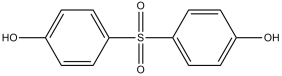
Bisphenol S (BPS) is part of polyethersulfone (PES) plastic, which is used to make hard plastic items and synthetic fibers for clothing and other textiles. BPS may also be used to make colors last longer in some fabrics. It is a common replacement for BPA in some types of paper receipts, and is also in protective coatings inside some food cans. Consumer products marketed as “BPA-free” might contain BPS.
Fact Sheet
BPS is found in
- Hard PES plastic in a variety of items, such as:
- Baby bottles.
- Microwave-safe dishes and containers.
- Parts of electronics, like screens for mobile phones and calculators.
- Heat-resistant parts used in automobile engines, industrial machinery, medical equipment, and other applications.
- Some clothing, including baby socks and onesies, sportswear, and raingear.
- Fabrics used for blankets, curtains, pillows, and furniture upholstery.
- Coatings in some food cans and nonstick pans.
- Some receipts printed on smooth shiny paper, such as from cash registers or gas pumps.
Possible health concerns
- May interfere with the body’s natural hormones.
- Might affect the reproductive system.
- Might harm the developing fetus and infant.
Possible ways to reduce exposure
- Eat less canned food and more fresh food.
- Choose glass or stainless steel containers for storing food and drinks.
- Avoid microwaving plastic containers.
- Breastfeed your infant if you can. For bottle-feeding, use glass bottles.
- Read labels on clothing and other fabrics, and avoid items made from “polyethersulfone” or “PES” fabric.
- Choose an electronic receipt, or no receipt, when possible. If you work as a cashier or otherwise frequently handle receipts, wear nitrile gloves.
- Because BPS can come out of products and collect in dust:
- Wash your and your child’s hands often, especially before preparing or eating food.
- Clean your floors regularly, using a wet mop or HEPA vacuum if possible, and use a damp cloth to dust.
Bisphenol F (BPF) is used to make hard plastic parts for household appliances, vehicles, and other items. It is also used in protective coatings, like linings in some drink cans and dental sealants. BPF can be formed from a naturally occurring chemical in yellow/white mustard seeds during production of some yellow mustard.
Fact Sheet
BPF is found in
- Some protective coatings used inside drink cans; on laminate flooring and concrete; and inside water tanks.
- Hard plastic parts used in various items, such as household appliances; cars, airplanes, and other vehicles; and medical devices.
- Some dental sealants.
- Some yellow mustard.
- Building materials, like sealants, adhesives, and grout.
Possible health concerns
- BPF may interfere with the body’s natural hormones.
Possible ways to reduce exposure
- Avoid canned drinks.
- If you eat mustard, choose a variety of types and brands. BPF hasn’t been found in any mustard made from brown or black seeds, and it’s not in all types of yellow mustard. Because it’s formed during production and is not intentionally added, BPF won’t be listed on the ingredient label.
- Because BPF can come out of products and collect in dust:
- Wash your and your child’s hands often, especially before preparing or eating food.
- Clean your floors regularly, using a wet mop or HEPA vacuum if possible, and use a damp cloth to dust.
