

Chemical not currently measured by Biomonitoring California
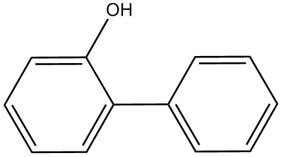
o-Phenylphenol is used as a disinfectant by healthcare facilities, schools, and various businesses. It may be added as a preservative to some products, such as paints and leather. o-Phenylphenol is also used on some citrus fruit and pears to control fungus, although this use has declined considerably in recent years.
Fact Sheet
o-Phenylphenol is found in
- Commercial disinfectants used in hospitals, nursing homes, schools, veterinary clinics, barber shops, agricultural operations, and other industries.
- Other items, such as:
-
- Some paints, adhesives, leather, and textiles, as a preservative.
- Some beverage cans.
- The surface of some citrus fruits and pears, in small amounts from agricultural fungicide application.
- Some freshly cut wood treated for fungus.
- A few household pest control products with added disinfectant.
- A few personal care products, such as cleanser for sensitive skin.
-
Possible health concerns of o-phenylphenol
- Might have an effect on the body’s natural hormones.
- May increase cancer risk.
Possible ways to reduce exposure to o-phenylphenol
The use of o-phenylphenol has been declining and exposures for most people are expected to be very low. If you think you might be exposed to o-phenylphenol in the ways listed above, here are some actions you can take:
- Wash your hands regularly, especially before eating or preparing food.
- Wash all citrus fruit and pears before eating.
- Clean your floors regularly and use a damp cloth to dust, because o-phenylphenol might be found in dust.
Biomonitoring California Information
Documents, Presentations, and Publications
4-t-Octylphenol is an industrial chemical used to make rubber products, such as tires. It is also used to make detergents and other products, such as adhesives and inks.
Fact Sheet
4-t-Octylphenol is found in
- Rubber products, like tires.
- Recycled rubber products, including artificial turf for athletic fields and playgrounds and rubber gardening mulch.
- Some detergents, adhesives, inks, paints, and varnishes.
Possible health concerns
Scientists are still studying how 4-t-octylphenol may affect people’s health. There is concern that 4-t-octylphenol:
- May interfere with the body’s natural hormones.
- May affect the reproductive system.
Possible ways to reduce exposure
- Based on studies conducted so far, exposure to 4-t-octylphenol is expected to be very low for most people.
- No actions are suggested to reduce exposure.
